


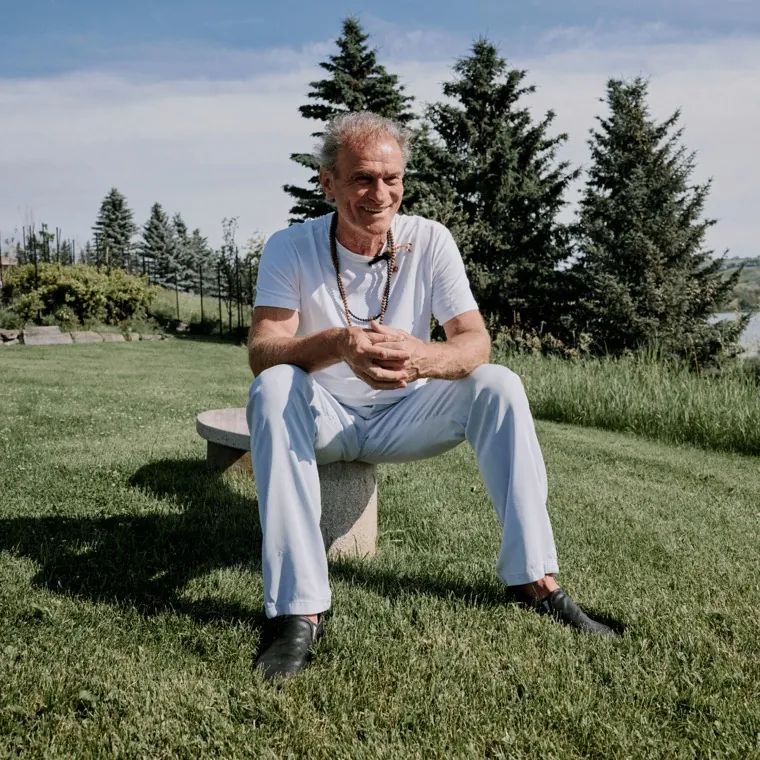
The short answer is yes. At least the version we once believed would save us.
Functional medicine emerged as a powerful corrective to the failings of the allopathic model. Where traditional medicine relied on the "N2D2" model, name of disease, name of drug, functional medicine brought upstream thinking, systems biology and root-cause inquiry. It promised a new medical frontier.
But functional medicine has now plateaued too. Why? Because it remains largely biochemical in orientation. It continues to treat the body as a collection of malfunctioning parts, applying supplements instead of pharmaceuticals, still thinking in protocols, still thinking linearly. It treats the mitochondria as ATP factories, not as quantum-sensitive sensors of environmental coherence.
The world has moved on. Our patients have moved on. And so must we.
The crisis we can no longer ignore
We are witnessing an unprecedented rise in chronic, complex illness. Over 60% of the general population now suffers from some form of chronic disease. Obesity, diabetes, Alzheimer's, autoimmune conditions, autism, infertility and myalgic conditions like mast cell activation syndrome (MCAS) have all exploded in incidence.
MCAS, in particular, is emblematic of the new reality. It affects multiple systems simultaneously (neurological, immunological, gastrointestinal, dermatological) but has no single biomarker and no singular cause. It wasn't even formally recognised until about fifteen years ago. At the height of my clinical practice I was seeing five or six cases a day.
And yet most practitioners are untrained to see it. Medical school doesn't prepare doctors to address conditions like MCAS. It teaches a silo-based system that carves the body into specialties. Neurologists treat brain fog, dermatologists treat rashes, gastroenterologists treat bloating. No one sees the whole. Patients are left unheard, untreated and disillusioned.
Meanwhile, practitioners feel overwhelmed and inadequate. The tools they were given, the frameworks they were taught, are not working. There is no cartography. No roadmap.
New principles are emerging
Emerging biophysical sciences are illuminating an even deeper story of human health, particularly in a world governed by blue light, screen time and an ever-expanding departure from the natural world.
- Circadian biology reminds us that every cell carries a molecular clock, so treatment must honour light–dark cycles and seasonal rhythms.
- Quantum biology shows that photons from sunrise literally charge the electron pool inside us, fuelling redox reactions far upstream of any supplement.
- Mitochondrial bioenergetics reveals that most chronic illness begins with energy failure: when mitochondria lose coherence, the entire organism fragments.
- Structured intracellular water acts as a fourth-phase battery that light can charge, amplifying cellular efficiency.
- Bioelectric fields, measured and manipulated since Galvani, govern growth, repair and nerve conduction long before chemistry catches up.
- Non-native electromagnetic fields from 5G, Wi-Fi and LED lighting scramble mitochondrial signalling, hormones, sleep architecture, fertility and cognition, and we have to reckon with them.
Taken together, these insights call us to shift from a chemistry-only paradigm to one that respects light, electricity and vibrational coherence as primary drivers of physiology.
A new model: from complexity to coherence
The reality is this: chronic illness does not fit into the existing medical paradigm.
We are dealing with conditions that arise from multiple antecedents, triggers and mediators. No one cause. No linear pathway. A symptom may be the final downstream signal of genetic susceptibility, environmental toxicity, unresolved trauma, family-system entanglements, circadian disruption, mitochondrial breakdown and soul-level dissonance.
Modern medicine, including much of functional medicine, still ignores the deeper architecture of disease. It rarely considers the impact of non-native (man-made) electromagnetic fields, or early developmental trauma, or the vibrational incoherence of a patient's belief system. It rarely considers that unresolved emotional patterns can alter the autonomic nervous system, leading to immune dysfunction, fatigue and cognitive decline. Even where it pays lip service, it has no way to diagnose, let alone treat, these complexities.
What is needed is an expanded cartography of the human condition. Not just biochemistry, but bioenergetics. Not just diagnostics, but meaning. Not just symptoms, but systems.
The Seven Stages: a new medical curriculum
For the last 30 years I have developed and refined a new model, the 7 Stages to Health and Transformation™: a practical, integrated roadmap for understanding and treating complexity in illness. It addresses the full spectrum of human experience:
- Environmental
- Biochemical / structural
- Electromagnetic / energetic
- Emotional
- Mental / cognitive / belief-driven
- Archetypal / family-systemic
- Spiritual / soul
It includes a diagnostic and therapeutic structure to assess and treat each layer. It teaches practitioners how to prioritise and sequence interventions. It includes instructions on how to take a history that captures not only symptoms but personal narratives and stories. Not only biochemistry, but biography. Not only illness, but meaning.
The model integrates:
- Mitochondrial dysfunction and the cell danger response
- Physics, circadian rhythms and quantum biology
- Unresolved trauma, emotional repression and ancestral burdens
- Soul work, individuation and the spiritual dimensions of healing
It synthesises East and West, inner and outer, ancient and emerging. From detoxification protocols to family constellations. From DNA methylation to daily meditation. From toxicology to self-actualisation.
This is not about adding more protocols. It's about shifting the paradigm entirely.
What changes for a practitioner
Working within this framework, you will:
- Get a comprehensive roadmap to navigate complex chronic illness with confidence.
- Use structured, prioritised diagnostic methods to uncover imbalances based on systems patterns, not symptom clusters.
- Apply a structured clinical method to triage which labs to run, how to interpret them in context, and when to initiate which therapies at which stage.
- Escape protocol fatigue and burnout by integrating a unifying framework that organises fragmented tools into a coherent approach.
- Form therapeutic alliances that heal by engaging patients as co-participants and activating their "inner healer".
This is what the future of medicine requires.
Not more data, but more depth. Not more answers, but better questions. Not just science, but soul.
If this resonates with you, I invite you to step into this new paradigm with me. This is the new medicine. This is what comes after functional medicine.
Frequently asked questions
References
- Popp, F.-A. (1999). About the coherence of biophotons. Neuroendocrinology Letters, 20(3–4), 157–158.
- Aschoff, J. (1960). Exogenous and endogenous components in circadian rhythms. Cold Spring Harbor Symposia on Quantitative Biology, 25, 11–28.
- Gorska, A., et al. (2022). Mitochondrial redox signaling and light: a crucial interface in health and disease. International Journal of Molecular Sciences, 23(17). PMC9391686
- Naviaux, R. K. (2014). Metabolic features of the cell danger response. Mitochondrion, 16, 7–17.
- Kruse, J. The Leptin Rx, cold thermogenesis protocols and associated lectures.


